
Zeta Global – Company Overview
Zeta Global is a marketing technology company that provides an AI-driven customer intelligence and marketing automation platform. Its software enables enterprises to acquire, engage, and retain customers by leveraging proprietary data, identity resolution, and machine-learning models to deliver personalized marketing across digital channels.
Zeta Global Financial Performance and Growth Profile
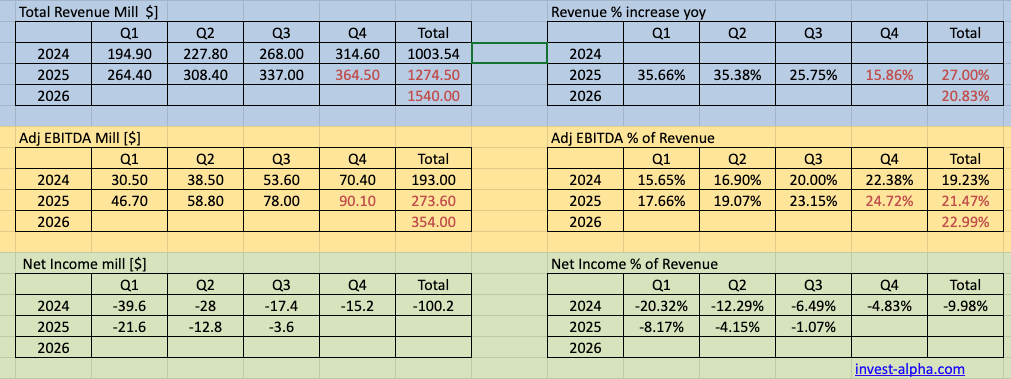
Zeta Global Investment Thesis – Bull Case
- AI-First Marketing Platform: Zeta’s AI models are trained on one of the largest proprietary consumer datasets, improving campaign ROI versus generic ad-tech tools. They were built
- The newly introduced Athena conversational agent is expected to improve the experience for customers providing greater control, better insights and increased overall ROI. This should increase stickiness with customers and drive more adoption. Currently in Client Beta and expected to go into production at the end of 2026.
- Cookieless Advantage: Strong positioning as third-party cookies decline, with deterministic identity resolution across channels
- Enterprise Stickiness: Long contract durations, embedded workflows, and high switching costs
- Cross-Sell Expansion: Ability to upsell analytics, orchestration, and data products within existing customers
- Operating Leverage: Margin expansion potential as revenue scales faster than fixed platform costs
- The Zeta Marketing Platform was developed in 2017 and is written to be AI native unlike many other companies that are trying to pivot their software to incorporate AI.
Key Risks and Bear Case for Zeta Global
- Competitive Market: Marketing technology remains crowded with large, well-capitalized incumbents.
- Customer Concentration Risk: Large enterprise clients can influence near-term growth volatility
- Ad Spend Cyclicality: Exposure to marketing budgets that can contract in economic slowdowns
- Execution Risk: Continued success depends on AI differentiation and data quality staying ahead of peers
- Valuation Sensitivity: High growth expectations leave shares vulnerable to multiple compression
Zeta Global Management Outlook and Strategy
- Raising our 2025 revenue guidance by $11 million at the midpoint and providing an initial 2026 outlook well ahead of consensus.
- At Zeta Live, we launched Athena, our next step in leading the AI revolution in marketing. Athena is our AI conversational super intelligent agent. Gives customers a real-time voice-activated command center for the Zeta marketing platform. One workspace to plan, execute, analyze, and optimize in plain spoken English. ou speak your objectives, it builds the experience, launches the program, and delivers insights on one screen, making it easier to adopt more channels, more use cases, and ultimately drive greater ROI and spend on Zeta’s platform.
Management continues to emphasize:
- Sustained 20%+ organic revenue growth
- Expansion of AI-driven decisioning and real-time personalization
- Increased focus on large enterprise wins
- Ongoing improvement in adjusted EBITDA margins
- Strategic investments in data assets and machine-learning infrastructure
Leadership has reiterated confidence in long-term demand for first-party data-driven marketing platforms.
Marketing Technology TAM, CAGR, and Market Opportunity
- Estimated Total Addressable Market (TAM): ~$65–70 billion
- Market CAGR (next 5 years): ~13–15%
Growth is driven by:
- Shift toward first-party data strategies
- AI-driven personalization
- Increased digital marketing complexity across channels
Zeta Global Products and Revenue Mix
| Product / Service | Description | Approx. Revenue % |
|---|---|---|
| Zeta Marketing Platform (ZMP) | Core AI-driven customer intelligence and orchestration platform | ~70% |
| Data & Identity Solutions | Proprietary consumer data, identity graph, enrichment | ~20% |
| Analytics & Insights | Attribution, modeling, and performance measurement | ~10% |
Customer Use Case : Large Omnichannel Retailer (Apparel / Consumer Brand)
Think of a $3–5B revenue U.S. apparel retailer with:
- E-commerce + physical stores
- Loyalty program
- Email, SMS, app push, paid media, and social campaigns
They are struggling with fragmented customer data and declining ad efficiency.
Which Department Uses Zeta?
Primary Owner: Marketing / Growth Team
- Chief Marketing Officer (CMO)
- VP of Digital Marketing
- CRM & Lifecycle Marketing team
- Performance marketing team
Secondary Stakeholders:
- Data & Analytics (customer insights, attribution)
- IT / Data Engineering (integration, identity graph)
- Finance (marketing ROI, CAC/LTV optimization)
Zeta is not an IT tool — it is a revenue and growth platform, owned by marketing.
Step-by-Step: How Zeta Is Actually Used
1. Customer Data Unification (Day 1–30)
Problem before Zeta
- Online purchases in Shopify
- In-store purchases in POS
- Email platform separate
- Paid media data siloed
- Loyalty IDs don’t match devices
What Zeta does
- Ingests:
- Website behavior
- Purchase history
- Email/SMS engagement
- Loyalty data
- Offline store transactions
- Resolves one customer identity across devices and channels
Result
- “Jane Doe” is now one unified profile instead of 6 disconnected records
2. AI-Based Customer Segmentation (Ongoing)
Marketing defines objectives, not segments.
Zeta’s AI automatically creates segments like:
- High-intent browsers likely to purchase in 7 days
- Lapsed customers with high win-back probability
- Discount-sensitive vs full-price buyers
- Customers likely to churn after last purchase
These are predictive, not rule-based segments.
3. Campaign Orchestration Across Channels
Instead of blasting everyone with the same promo:
Example Campaign
“Spring Sale – Drive Conversion Without Discounting”
Zeta orchestrates:
- Email to high-propensity buyers (no discount)
- SMS only if email unopened
- Paid media retargeting suppressed for customers likely to convert organically
- App push personalized by product affinity
- Direct mail only for high-LTV offline shoppers
All of this happens in one platform.
4. Real-Time Decisioning
If a customer:
- Clicks an email
- Browses jackets
- Abandons cart
Zeta instantly:
- Updates purchase probability
- Adjusts next message
- Changes creative and offer
- Suppresses wasteful ad spend
This is real-time AI decisioning, not static marketing automation.
5. Measurement & ROI Optimization
Zeta provides:
- Incrementality testing (what actually drove revenue)
- Attribution beyond last-click
- CAC by cohort
- LTV forecasts
Finance and marketing finally align on true ROI.
What Business Outcome Does This Drive?
For a retailer, typical outcomes:
- Higher conversion rates without heavier discounting
- Lower paid media waste (suppression of low-intent users)
- Higher LTV via better lifecycle engagement
- Improved margins from personalization vs blanket promos
This is why Zeta sells into large enterprises, not SMBs.
Why They Chose Zeta (vs Adobe / Salesforce)
- Faster time to value
- Built-in identity graph (no heavy DIY data plumbing)
- Stronger AI-driven decisioning
- Better performance in a cookieless world
Zeta versus DSPs.
Scenario 1: “Just Run the Campaign” (DSP-Only)
Stack
- Amazon DSP
- Google DV360
- The Trade Desk
How it works
- Media buyer defines audiences
- DSP optimizes bids
- Spend flows
- Reporting is channel-specific
When this is enough
- Smaller budgets
- Short-term promos
- Performance-only mindset
- Less concern about cross-channel waste
This is how most companies operate.
Scenario 2: “Maximize ROI Across the Funnel” (Zeta + DSPs)
Stack
- Zeta Global (decisioning)
- DSPs (execution)
- Email / SMS / CTV / Retail media
How it works
- Zeta decides:
- Who to target
- Who to suppress
- Which channel is best
- DSPs execute buys
- Zeta measures incrementality
- Spend is reallocated dynamically
When CMOs choose this
- Large marketing budgets ($50M+)
- Omnichannel complexity
- Pressure from CFO on CAC & LTV
- Cookieless environment
- Need for enterprise-grade attribution
This is where Zeta earns its keep.
Why DSPs Don’t Become Zeta (Even If They Wanted To)
Key Players
- Zeta Global – decisioning brain
- The Trade Desk – independent DSP
- Amazon DSP, Google DV360 – walled-garden DSPs
1️⃣ DSPs Are Incentivized to Spend More — Zeta Is Incentivized to Spend Less
This is the core conflict.
DSP economics
- Revenue = % of ad spend
- Success metric = more impressions, more bids, more spend
- Optimization goal = win auctions efficiently
Zeta economics
- Revenue = software + intelligence
- Success metric = incremental revenue per dollar
- Optimization goal = avoid waste
If a DSP built Zeta-level intelligence, it would often conclude:
“Don’t buy this impression.”
That is bad for DSP revenue.
Zeta can say that because it doesn’t live off media spend.
2️⃣ DSPs See Only the Ad — Zeta Sees the Customer
DSPs operate at the impression layer.
They know:
- Bid price
- Context
- Auction outcomes
- Clicks / conversions inside the channel
They do not natively know:
- Customer lifetime value
- Cross-channel exposure
- Email/SMS/CRM history
- Offline purchases
- Organic vs paid cannibalization
Zeta’s intelligence depends on owning the customer graph, not the auction.
A DSP trying to do this would need to become:
- A CDP
- A CRM-adjacent system
- A data unification platform
That’s a completely different product DNA.
3️⃣ Identity Conflicts (Especially in Walled Gardens)
For DSPs like Amazon or Google:
- They will not expose identity
- They will not allow cross-platform intelligence
- They benefit from data silos
Zeta works above these silos:
- Clean rooms
- Privacy-safe matching
- Cross-channel learning
A DSP trying to do that would:
- Undermine its own walled garden
- Reduce advertiser lock-in
So they won’t.
4️⃣ Organizational Reality: DSP Buyers vs Zeta Buyers
This matters more than people think.
DSP buyer
- Media buyer
- Performance marketer
- Agency
- Daily optimization mindset
Zeta buyer
- CMO
- Head of Growth
- Lifecycle / CRM owner
- CFO increasingly involved
DSPs are tools.
Zeta is a strategic system.
You don’t rebuild your org around a DSP.
5️⃣ The Trade Desk Is Trying — But Carefully
To be fair, The Trade Desk is moving up-stack:
- UID2 (identity)
- Measurement
- Forecasting
- Some decisioning
But notice the line they won’t cross:
- They never tell you not to spend
- They optimize spend, not suppress it
- They remain media-centric
That’s deliberate.
6️⃣ Why “Just Build It” Fails in Practice
To truly replicate Zeta, a DSP would need:
- Multi-year enterprise contracts
- Deep CRM integrations
- First-party data ingestion
- Offline + online identity resolution
- AI models trained on customer outcomes, not impressions
At that point, they’ve stopped being a DSP.
They’ve become… Zeta.
The Clean Mental Model (This Is the One to Remember)
DSPs optimize how to buy ads.
Zeta decides whether to buy ads at all.
Those are fundamentally incompatible incentives inside one product.
DSPs don’t build Zeta-level intelligence because:
- It would reduce ad spend (hurts revenue)
- They don’t own the customer graph
- Walled gardens prevent cross-channel intelligence
- The buyer and org structure are different
- The business model breaks if they succeed
That’s why Zeta exists as a separate layer — and why it can coexist with every DSP instead of competing with them.
Zeta Global Business Model Explained
Zeta operates a subscription-based SaaS model supplemented by usage-based data and activation fees.
- Long-term enterprise contracts
- Recurring platform subscriptions
- Incremental revenue from data usage and campaign scale
- High gross margins with expanding contribution margins
Zeta is not an IT tool — it is a revenue and growth platform, owned by marketing.
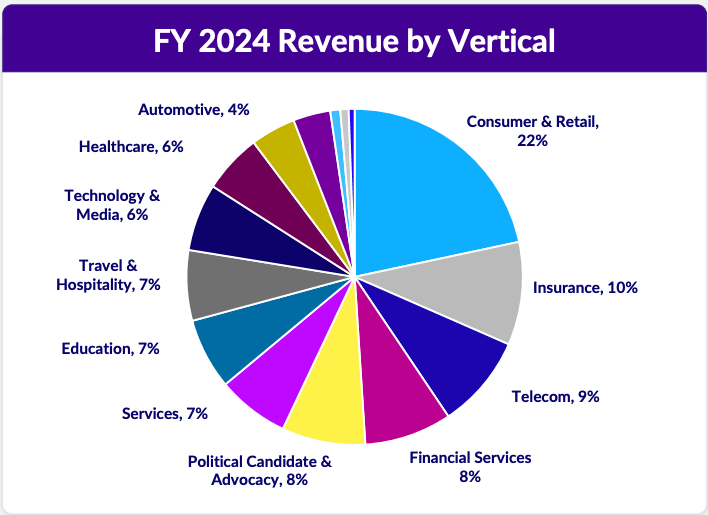
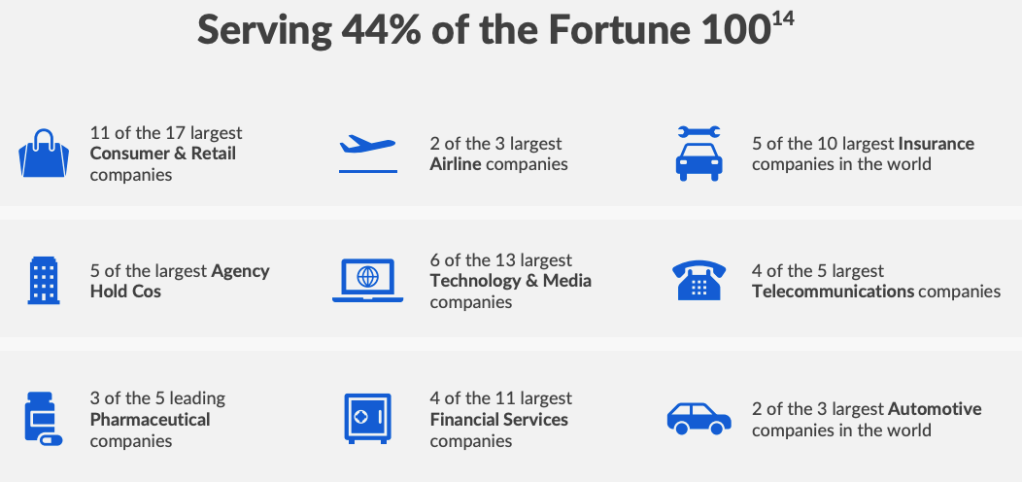
Zeta Global Customers and End Markets
Zeta primarily serves large enterprises and upper-mid-market companies, including:
- Retail and e-commerce
- Financial services
- Travel and hospitality
- Media and subscription businesses
Customers use Zeta to manage omnichannel marketing, customer acquisition, and lifecycle engagement.
Zeta Global Competitors
| Competitor | Competing Product Focus |
|---|---|
| Salesforce | Marketing Cloud and customer data platform |
| Adobe | Adobe Experience Platform and Marketo |
| Oracle | Oracle CX and data-driven marketing solutions |
Zeta Global Founding History and Background
Zeta Global was founded in 2007 with the goal of building a data-driven marketing platform focused on customer intelligence rather than traditional ad-tech. Over time, the company expanded through organic development and acquisitions, evolving into a full-stack AI-powered marketing automation platform for enterprises.
 Invest Alpha